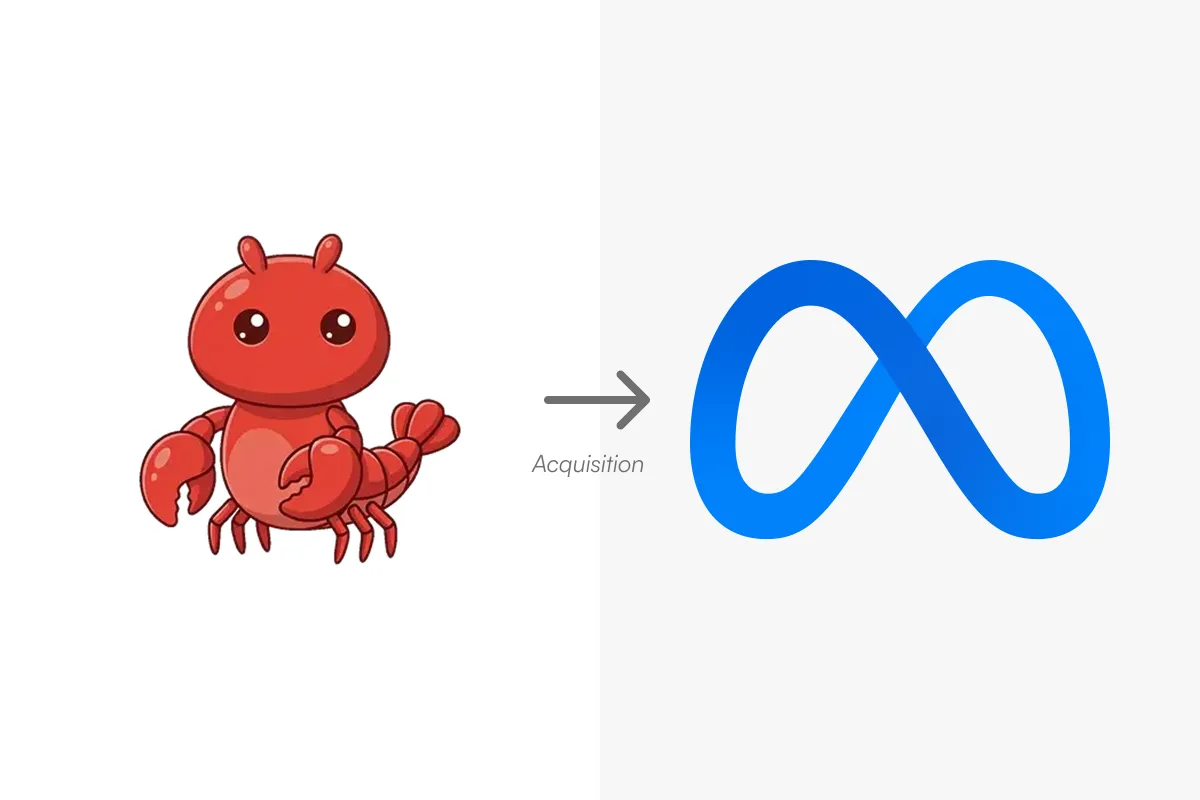
On MoltBook's Acquisition
Here’s how I see it.
The world is split right now: something like 90% of people haven’t touched AI at all. Another ~8% use it as “better Google.” And then there’s the thin sliver, call it 2%, who are actually getting compounding leverage out of tools like Claude Code, Dotted, etc.
The OpenClaw crowd is the tiniest percent of that tiniest percent. And that doesn’t mean it’s fake. What they’re building is real in the sense that it’s a preview of a plausible future: a world where everyone has agents that are independent, proactive, and running work on their own.
If that world shows up, then of course there will be an entire economy and toolchain designed for agents: agent-to-agent marketplaces, “social networks” for agents, and weird-but-logical stuff like “Rent-to-Human” (basically TaskRabbit, but the customer is the agent).
But here’s the catch: it’s an incredibly dangerous space to operate in right now.
OpenClaw is not secure. It’s not safe. It’s not ready for regular people. Which is why, for mainstream users, the right on-ramp is agents that deliver OpenClaw-level capability inside a normal SaaS security/regulatory posture. People should have something that behaves like a product you can trust in the real world.
That’s the lane we should be in: ship useful agents in a “safe and sane” wrapper, then gradually pull in OpenClaw-style power as we can do it responsibly.
IMO, the OpenClaw scene has a bit of an NFT vibe right now. Lots of noise, lots of hype, and it’s still hard to point to something consistently useful or meaningfully money-making that these bots have done. It might be the beginning of something huge. Or it might be a flash in the pan. We just don’t know yet.
